


Axon is a global public safety technology company focused on relentlessly innovating to protect more lives in more places through an integrated ecosystem of hardware and software.
Public safety technology
4,000+ employees
Scottsdale, Arizona, USA
"Everything just works together. No different operating systems, no different environments. Just seamless."
Axon's New Ventures Labs is a small team with a big mandate: build and test new product ideas fast. Gabe Othman, senior director, leads a six-person group spanning mechanical, electrical, and visual design. Daniel Strabley, senior applied research engineer, handles mechanical and electrical work — he's the one turning concepts into functional prototypes that can be tested, broken, and refined.
Looking for speed
"In my previous job, I had access to the usual big CAD tools, but they always felt too heavy for quick exploration," says Daniel. He went looking for something faster and found Shapr3D five years ago.
When he joined Axon, the team was using a more traditional CAD system. It worked, but it didn't match the pace they needed. The learning curve was steep, and the software wasn't designed for quick iteration or fast concept exploration. Daniel knew what could work. He suggested they try Shapr3D.
"Learning Shapr3D was very quick for me," Daniel explains. "With all the tutorials built in, you understand how everything works within a day. By the end of the week, you have a solid grasp on the basics."
Gabe saw the potential immediately. It was easy enough that anyone on the team could pick it up, so they made the switch.
Designing without falling out of flow
"It's more representative of real life. You stay in the flow — you don't get pulled out of your thinking to figure out the software, you just keep designing," says Daniel.
Daniel can grab geometry and push or pull faces without planning every step in advance. Ideas move from his head to the screen naturally, and using the iPad with the Apple Pencil feels closer to sketching than any other CAD tool.
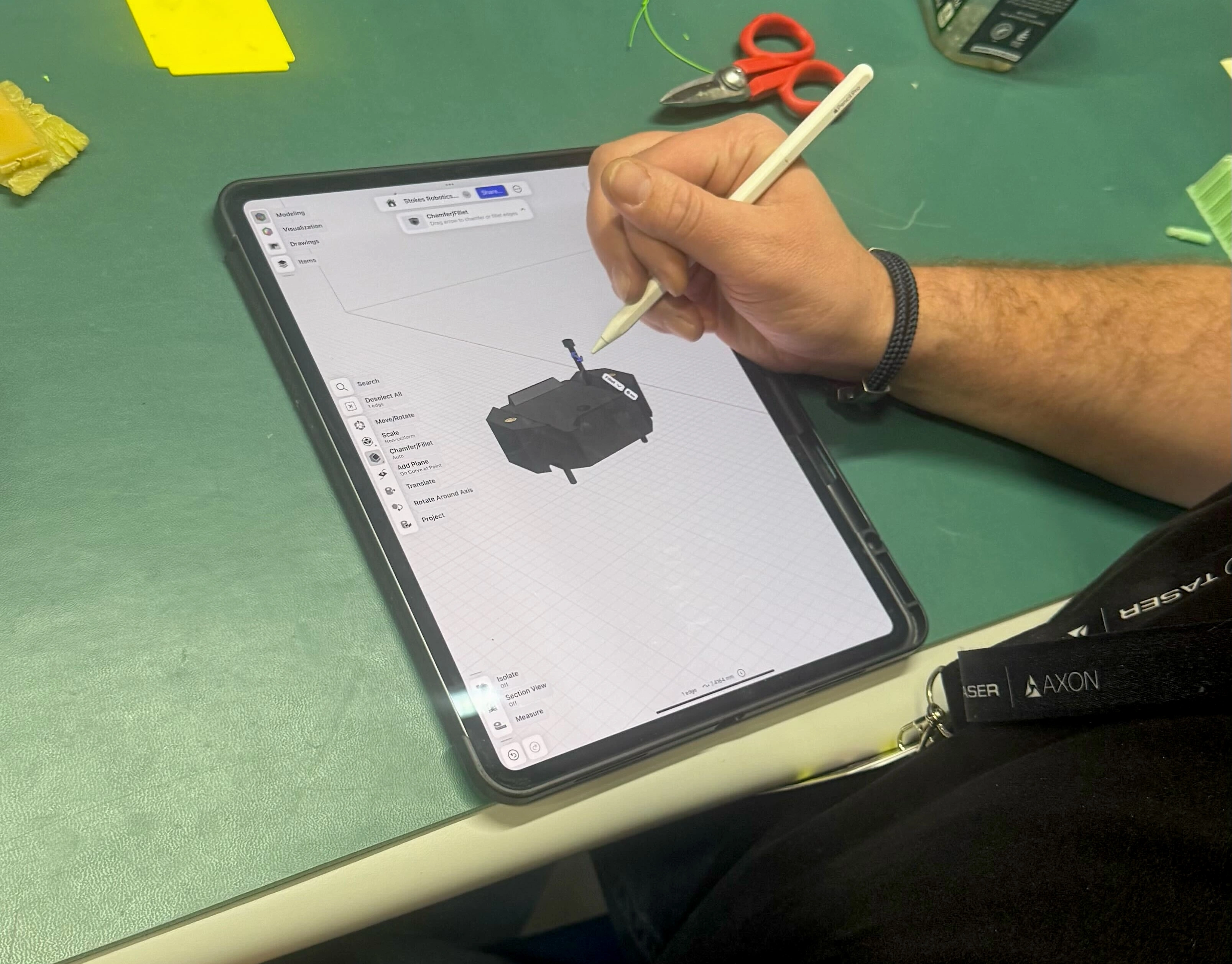
The iPad’s portability allows Daniel to design anywhere, even on the go. Daniel travels constantly between Axon's locations, and he started pulling out his iPad on flights. "If you ever see me in the airport, I've got my face buried in my iPad — definitely doing something in Shapr," he says. "I can kill a four-hour flight just doodling away, and I land with updates to the project."
The workflow stays uninterrupted all the way to his shop. From the iPad, Daniel AirDrops files directly to his machine running CAM software. "Everything just works together. No different operating systems, no different environments. Just seamless."
Design reviews in 3D
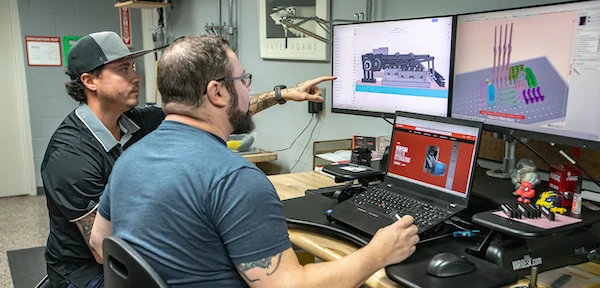
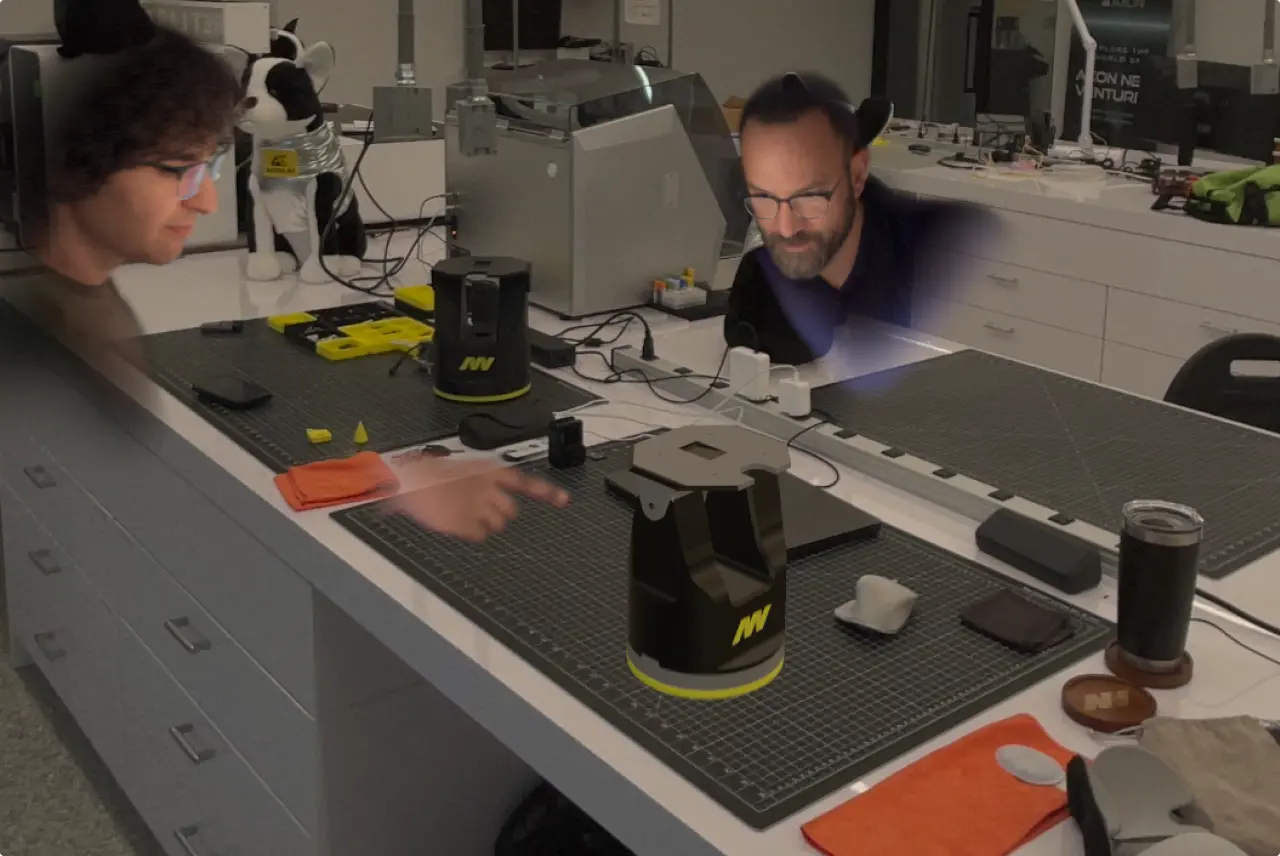
The same things that made Shapr3D great for exploring ideas — fast iteration, direct manipulation, the ability to work anywhere — make it a natural fit for design reviews. “Before Shapr3D, communicating design ideas meant looking at PowerPoint”, Daniel notes. “People were literally drawing squares on 2D images and then putting arrows... then they were trying to convert this 2D image into understanding the 3D space."
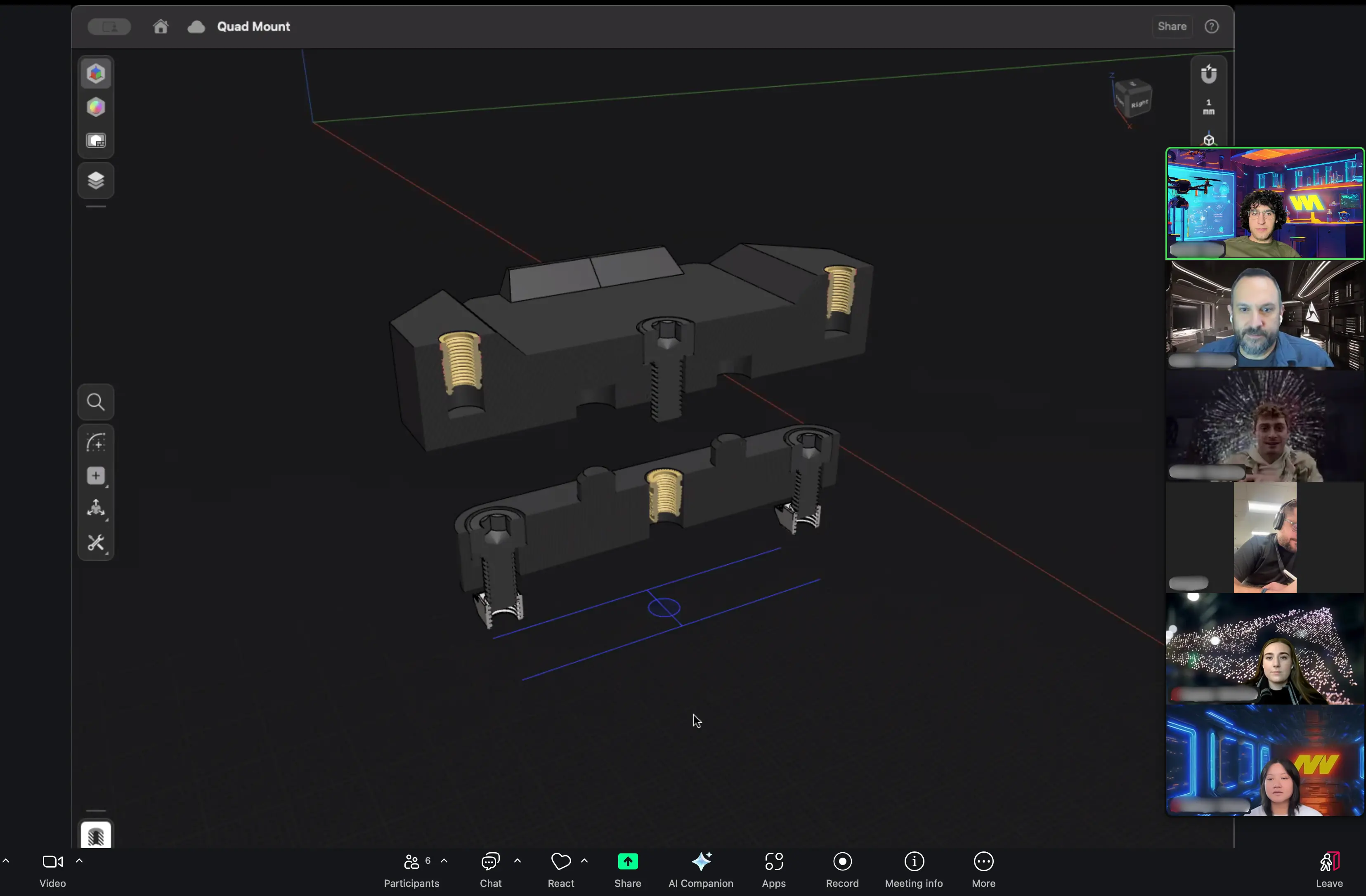
When someone has feedback, it can happen right on the spot. Gabe describes a typical moment: "Someone says, 'If this part were inset a little more, it'd make a big difference.' You pull out your iPad and go — now it's inset."
This means a shorter to-do list when meetings end. Everyone sees the same thing, changes happen live, and decisions stick.
Aligned in the meeting, printed by the afternoon
Once a direction is agreed upon, Daniel moves straight to fabrication. These prototypes aren't presentation models, they're functional parts meant to be tested and stressed. “Against my wife's wishes, the machines in the shop run 24/7,” Daniel says. He's never really off the clock. “Shapr3D is just so fast to make changes."
Other engineering teams at Axon have noticed. Groups that typically take a day or two to cycle through CAD revisions are looking at Shapr3D because they see how quickly Daniel moves from first idea to prototype.
Checking scale before cutting material
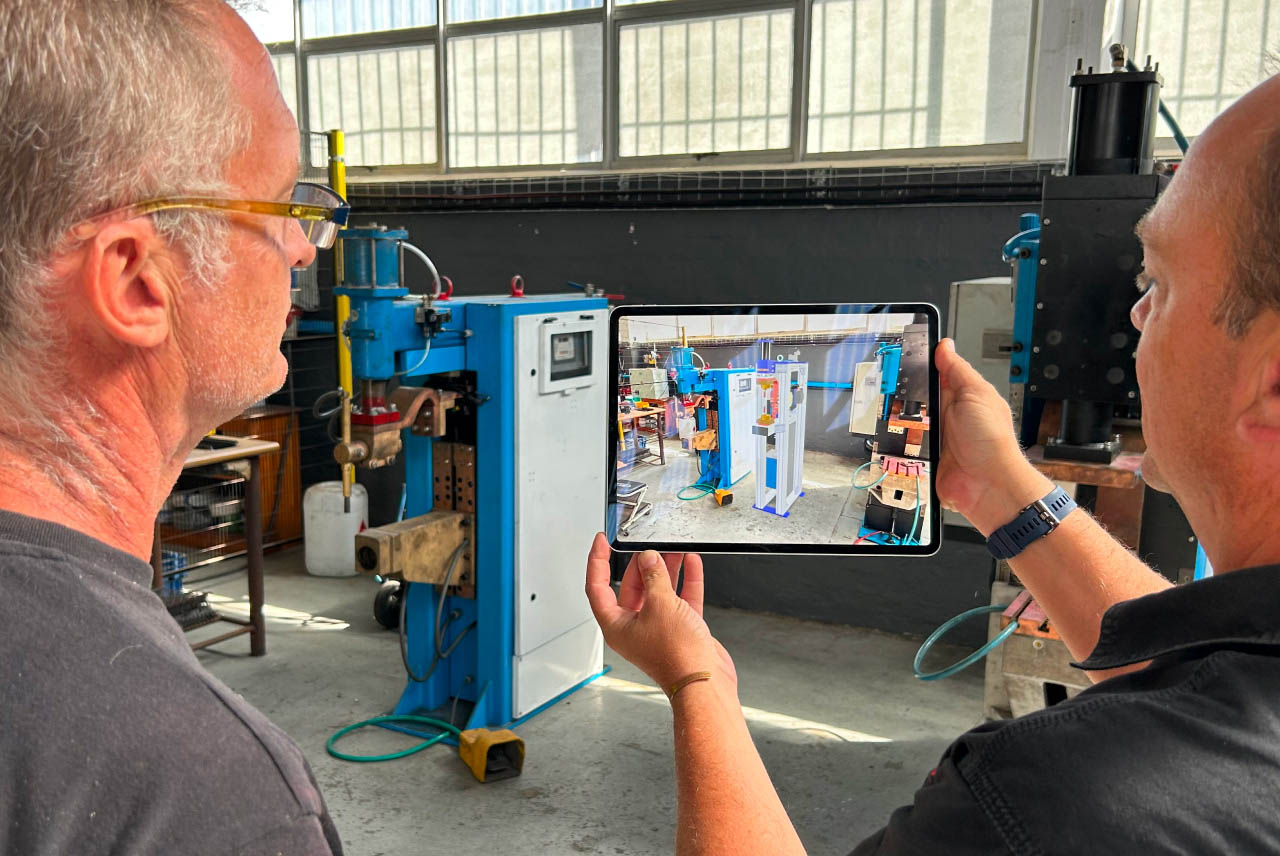
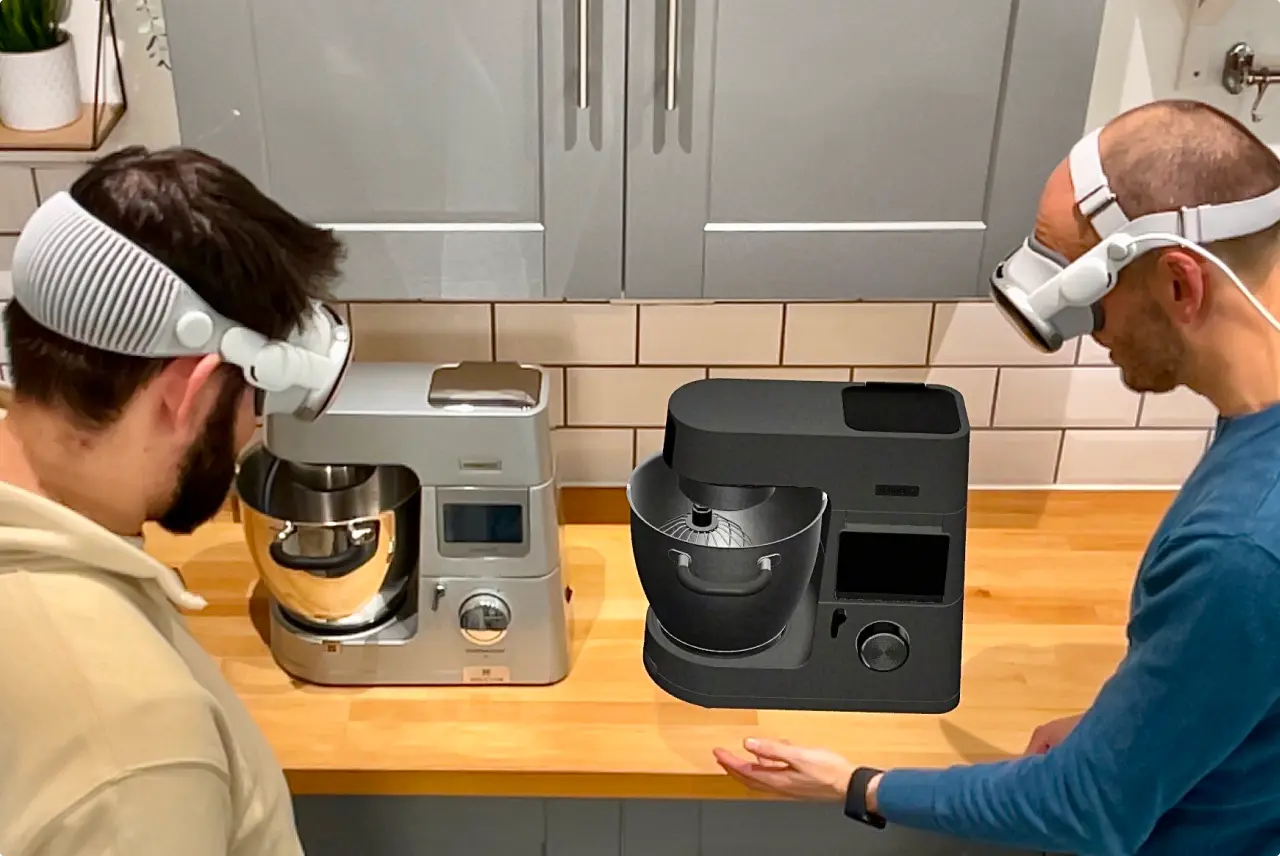
For small parts, Daniel has a good sense of how big something will be. But larger objects are harder to judge on a screen. "I designed it perfectly, it looks great on the iPad," he says. "But then when I view it in real life, I'm like, wow, it's much bigger than how I imagined."
With Shapr3D's AR feature, he can view a model in the room and understand the dimensions before cutting material. Catching those errors earlier means fewer wasted prototypes on large-scale projects.
More ideas explored, more prototypes tested
Daniel found a tool that let him explore ideas. The exact speed is carried through to how design reviews happen in 3D rather than flat images, how decisions get made live, and how more people can contribute because the learning curve is low.
Gabe sees it too. “The number one thing for me is accessibility,” he says. “The ability for anyone to get in and start building.” Even Axon's CEO now uses Shapr3D to stay closer to what's being built, and Gabe is curious to see where teamwide adoption of Shapr3D takes them next.