


Kenwood Limited, a division of the De'longhi Group, designs kitchen appliances for food preparation. Based in the U.K., Kenwood includes about 200 employees while overall the Group is comprised of approximately 9,000 employees globally.
Manufacturing, consumer appliances
200 employees
Havant, U.K.
In 18 months, Kenwood’s design team went from emailing CAD files to conducting instant spatial design reviews with Shapr3D on Apple Vision Pro. Validating designs before building physical prototypes allows them to accelerate their sprint cycles.
When Samuele Meda puts on his Vision Pro and loads a Shapr3D model, he uncovers design issues that once required a ~€20,000 physical prototype. That's the difference between waiting six weeks for validation and getting answers in minutes.
The challenge of physical prototyping
Before Shapr3D, Kenwood's design team faced the industry reality: physical prototypes typically cost €10,000-20,000 and take six weeks to produce. That's long enough for any design to evolve substantially, making physical models outdated by the time they arrive.
"We'd commission a model, wait, and when it arrives, I'd have to tell stakeholders: 'Don't look at the knob position, that's changed. Ignore this edge, we modified it." says Meda, design director at Kenwood. "We were always showing yesterday's design."
The natural evolution of any design during prototyping forces teams to review and make decisions based on models that no longer reflect the current design.
Design sprints where ideas populate in real time
Kenwood's two-week design sprints have transformed from a wait-and-see approach to a collaborative, time-saving process thanks to augmented reality. Designers once sketched on paper, but now most team concepts are directly created in Shapr3D's shared team spaces.
"I can see ideas populating from different designers,” Meda explains. "I'll spot an interesting concept, duplicate it, and riff on it instantly. Before, we were sending files back and forth, opening emails, and importing. Now it's live."
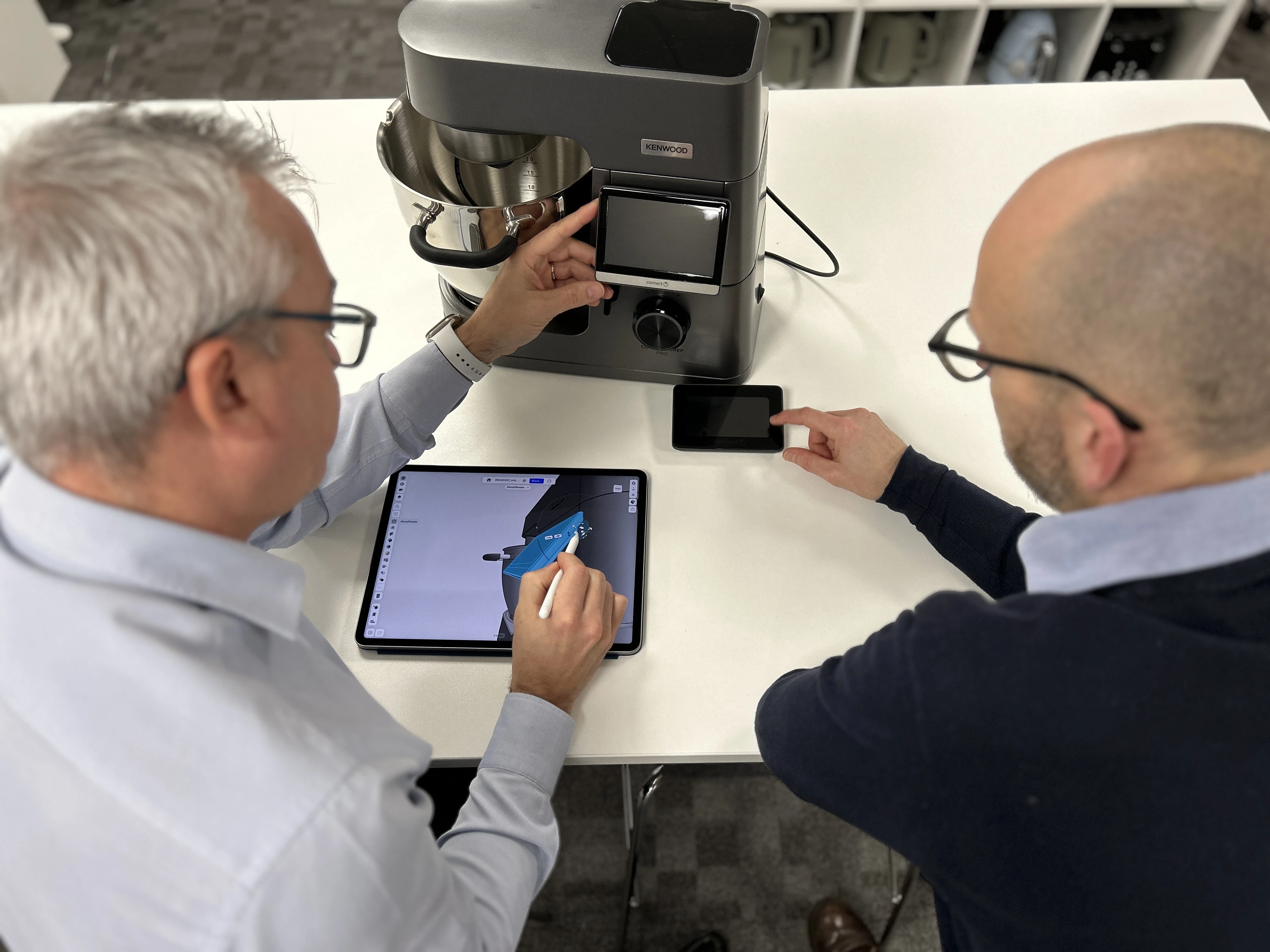
The shift from solo sketching to collaborative 3D changed everything. Designers import existing "cortex" components—motors, gearboxes, electronic boards—on day one. They model around real constraints from the start, instead of discovering fit issues weeks later.
From solo iPad sketching to team-wide concepting
What started as Meda sketching on his iPad during flights has expanded to the entire team. Eighteen months ago, he was alone, importing STEP files to review on planes. Today, the team folder explodes with concepts during sprints.
"When designers have the right tool, they feel empowered," Meda notes. "I can see the people when they say 'oh yeah, let's jump on Shapr3D Vision Pro'—you see it's not like 'ugh, another design review they're making me sit through.' They're excited."
Apple Vision Pro reviews that replace physical prototypes
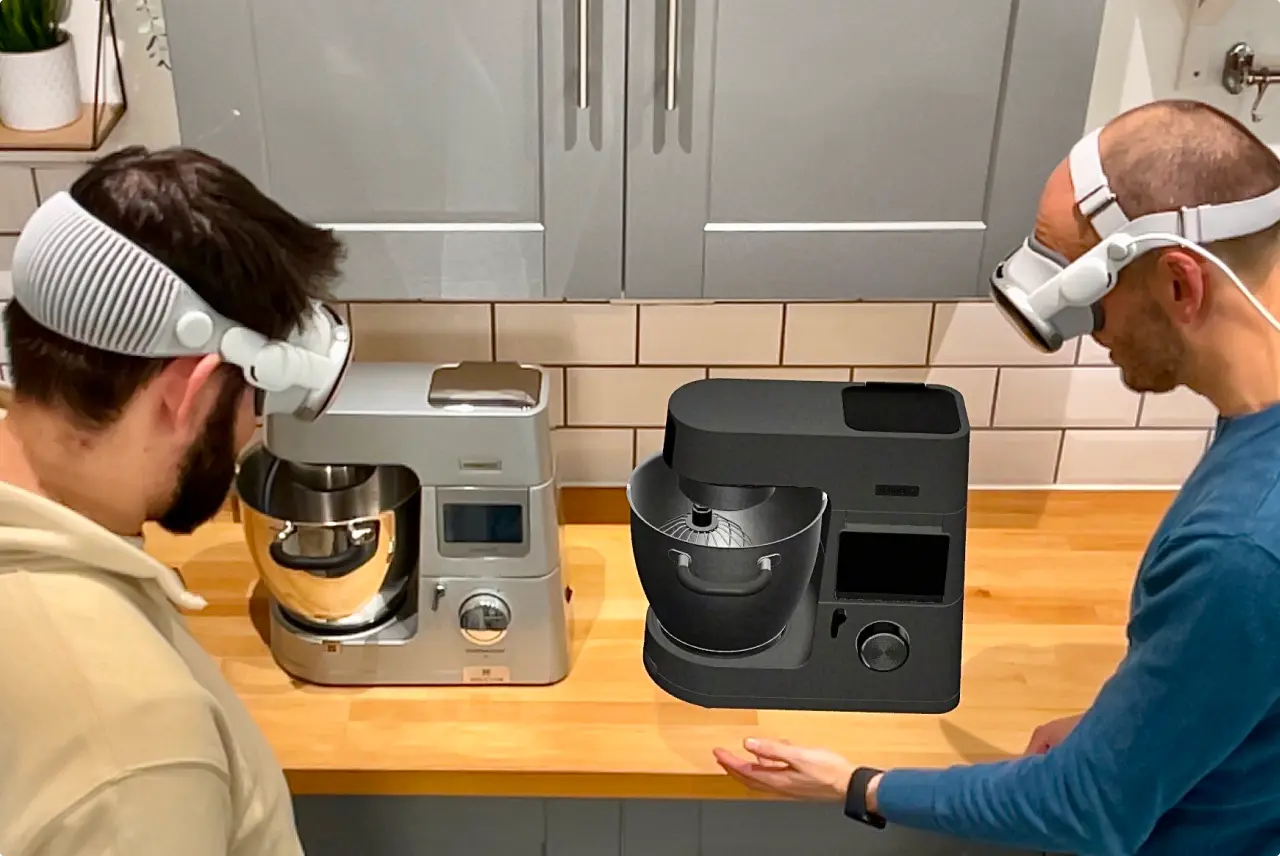
The game-changer came with Vision Pro integration. Teams can now conduct unlimited spatial reviews at actual scale, allowing them to validate and iterate designs extensively before committing to physical prototypes.
"Yesterday, we reviewed a design in the studio using Apple Vision Pro. I could see the proportions were off, something you'd never catch on a screen," says Meda. "Being able to catch and fix these issues instantly, rather than waiting sometimes even 6 weeks to discover them, transformed our process."
"You cannot commit every day to a new physical model because of cost," Meda explains. "Now with Vision Pro, when we have an idea, we just show it. The advantage is that you don't lock your creativity because of the cost and time naturally involved in physical prototyping."
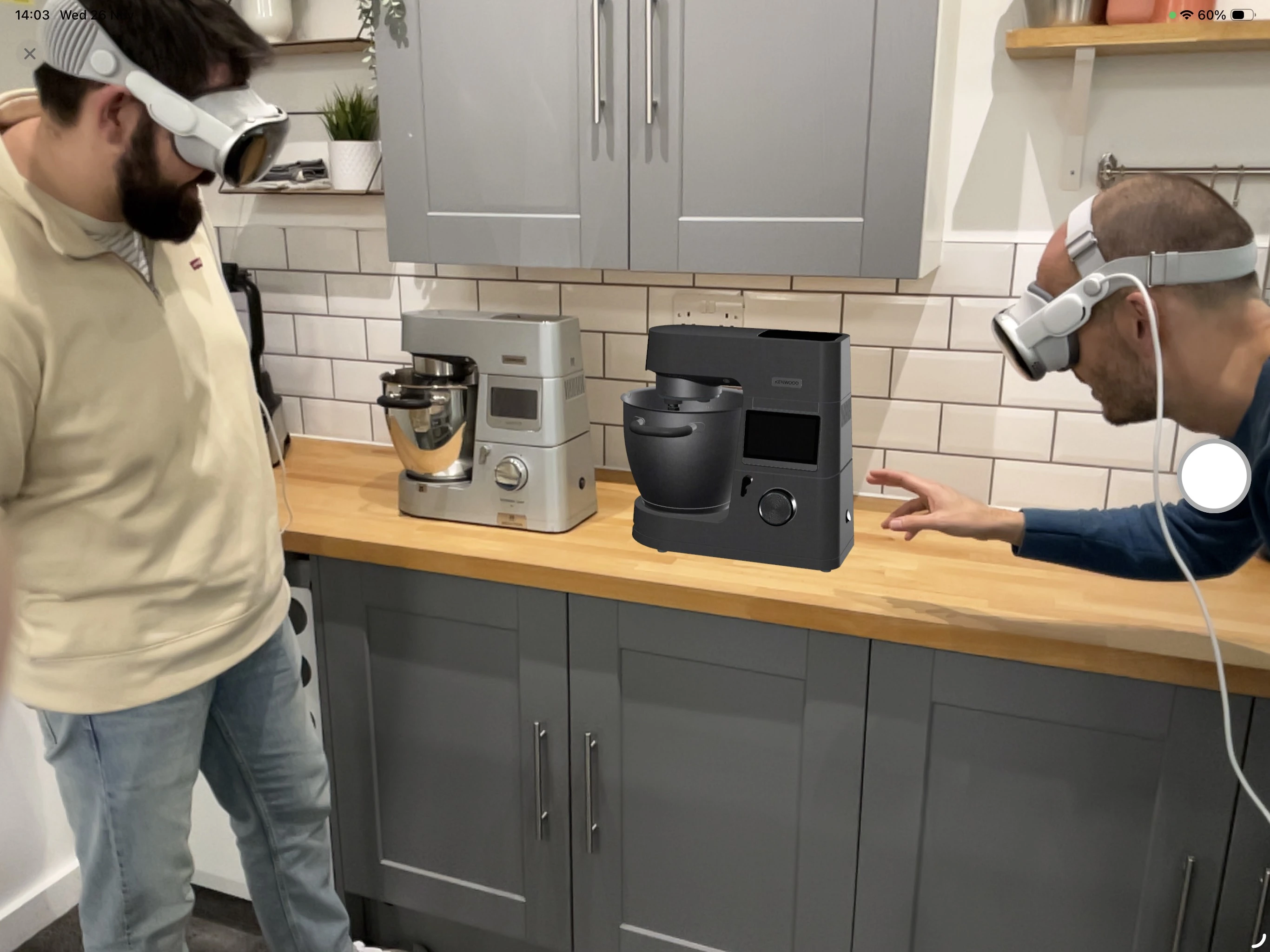
The economics are undeniable:
- Validation cycles: Unlimited spatial reviews before physical prototyping
- Time to insight: Immediate in design review meeting instead of weeks later
- Cost efficiency: Test multiple variants without multiple physical models
- Final prototypes: More refined, with fewer surprises
- Break-even point: Just one prototype avoided (typical cost: €15,000-20,000)
"The Swiss Army knife beats the Formula 1 car"
Meda doesn't mince words about traditional CAD: "SolidWorks is like a Formula 1 car—incredibly powerful, but you need 100 engineers to start it. Shapr3D is a Swiss Army knife. I can jump in after a few clicks and be modeling. I'm sitting in the airport lounge, grab my iPad, and I'm modeling within seconds. Try doing that with Siemens NX."
This accessibility transformed how the design team works. "When you're having fun, you're more creative," Meda says. "And I can see it—the team is exploring more concepts because the cost of trying something new dropped to zero."
Shapr3D's team spaces work like Google Docs for 3D design. All files live in shared folders where designers can jump into each other's models, duplicate and iterate on concepts, or share review links for stakeholder feedback. "I can see ideas populating from different designers in real-time," Meda says. "No more email-attach-import cycles, no more 'can you send me that file again?' The friction that killed creative momentum has disappeared."
Exploration becomes the competitive advantage
For a company competing in the brutal small appliance market—where copycat competitors can replicate designs in weeks—Kenwood's newfound agility matters. They're not just optimizing their prototyping process. They're exploring bolder concepts because testing wild ideas no longer requires physical commitment.
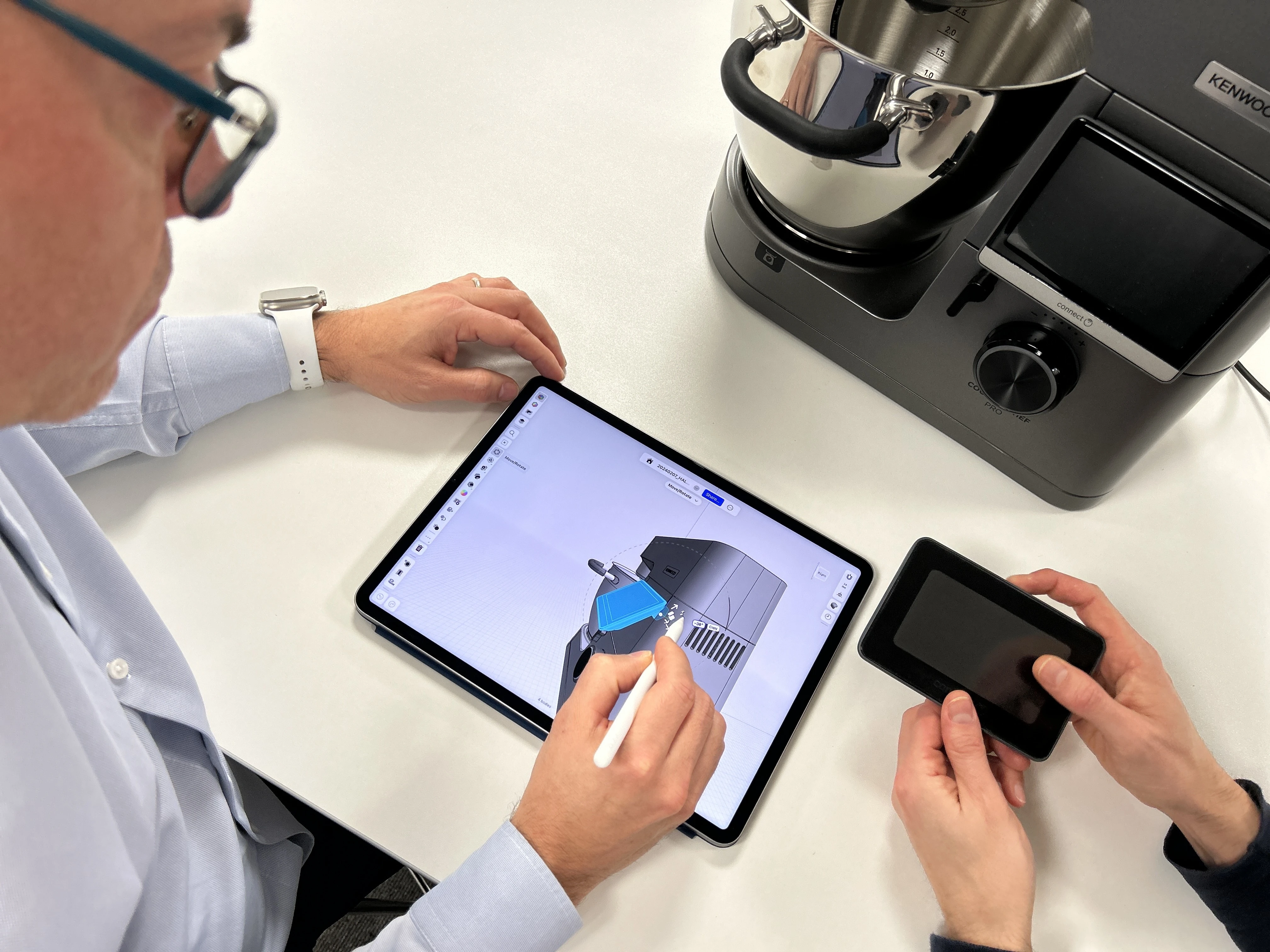
Samuele’s team now generates dozens of concepts per sprint, a 10x increase from their pre-Shapr3D days. They validate designs spatially in Vision Pro, test multiple materials and color variations, and arrive at physical prototyping with much higher confidence.
For design teams watching their best concepts get watered down by risk-averse decision-making, Kenwood's transformation offers a blueprint: when you eliminate the cost of exploration, creativity flourishes.
As Meda puts it: "Before Shapr3D, we were always showing yesterday's design. Now we're designing tomorrow's products."