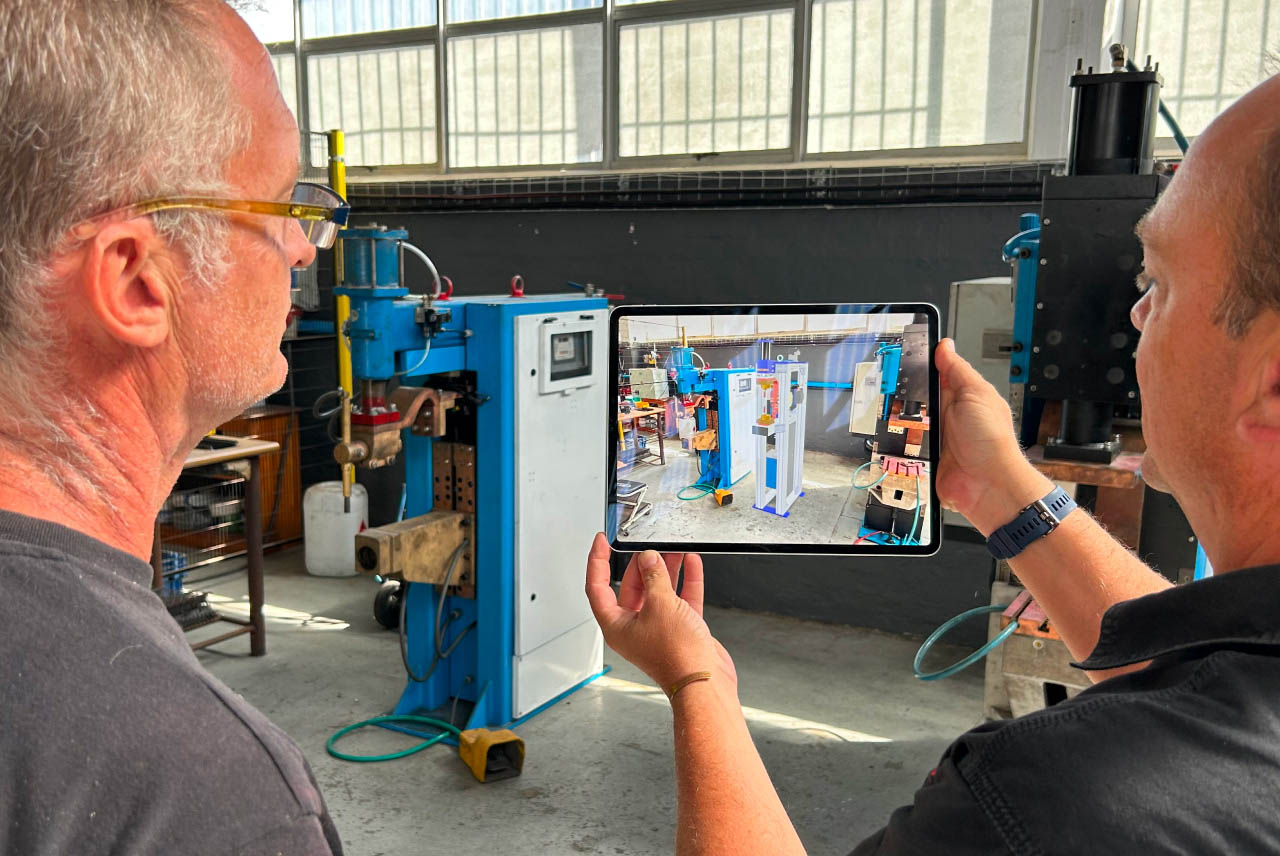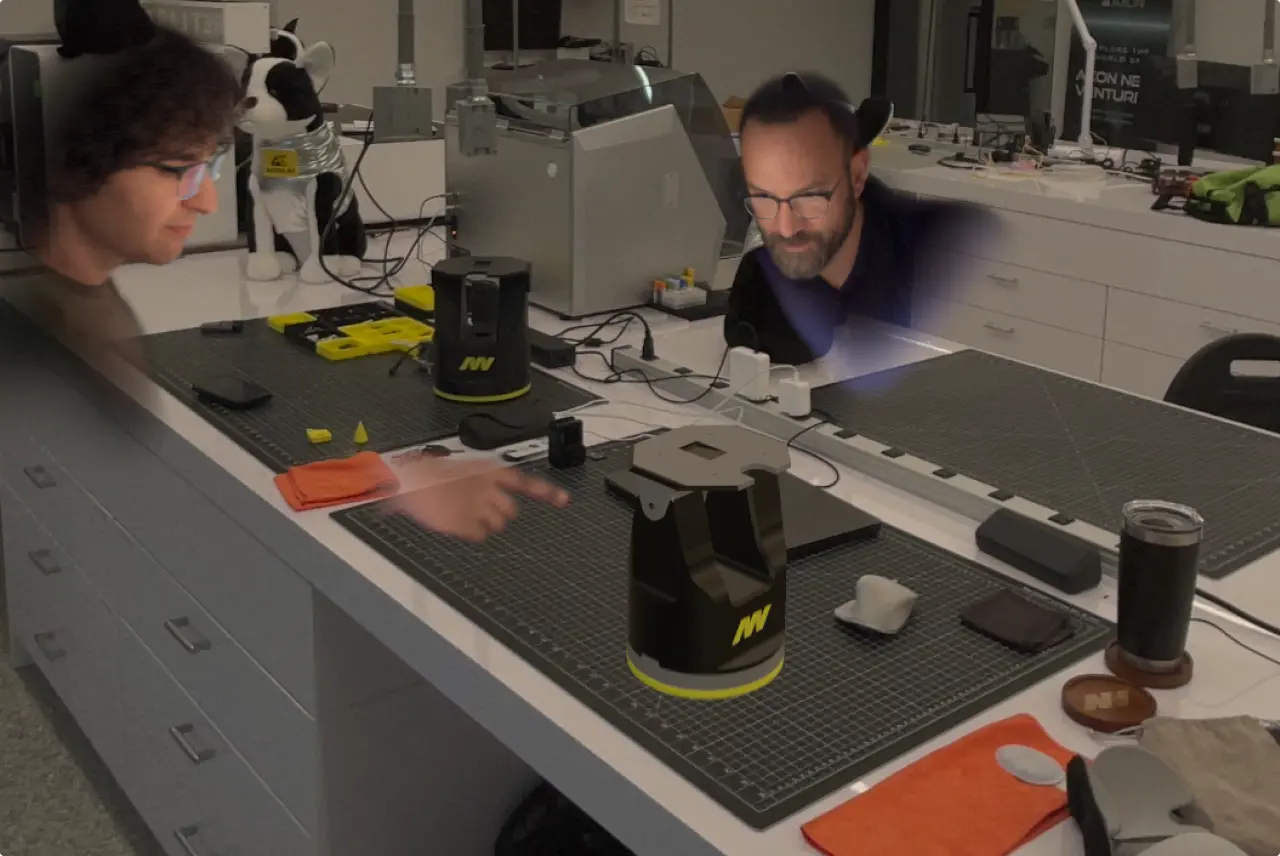


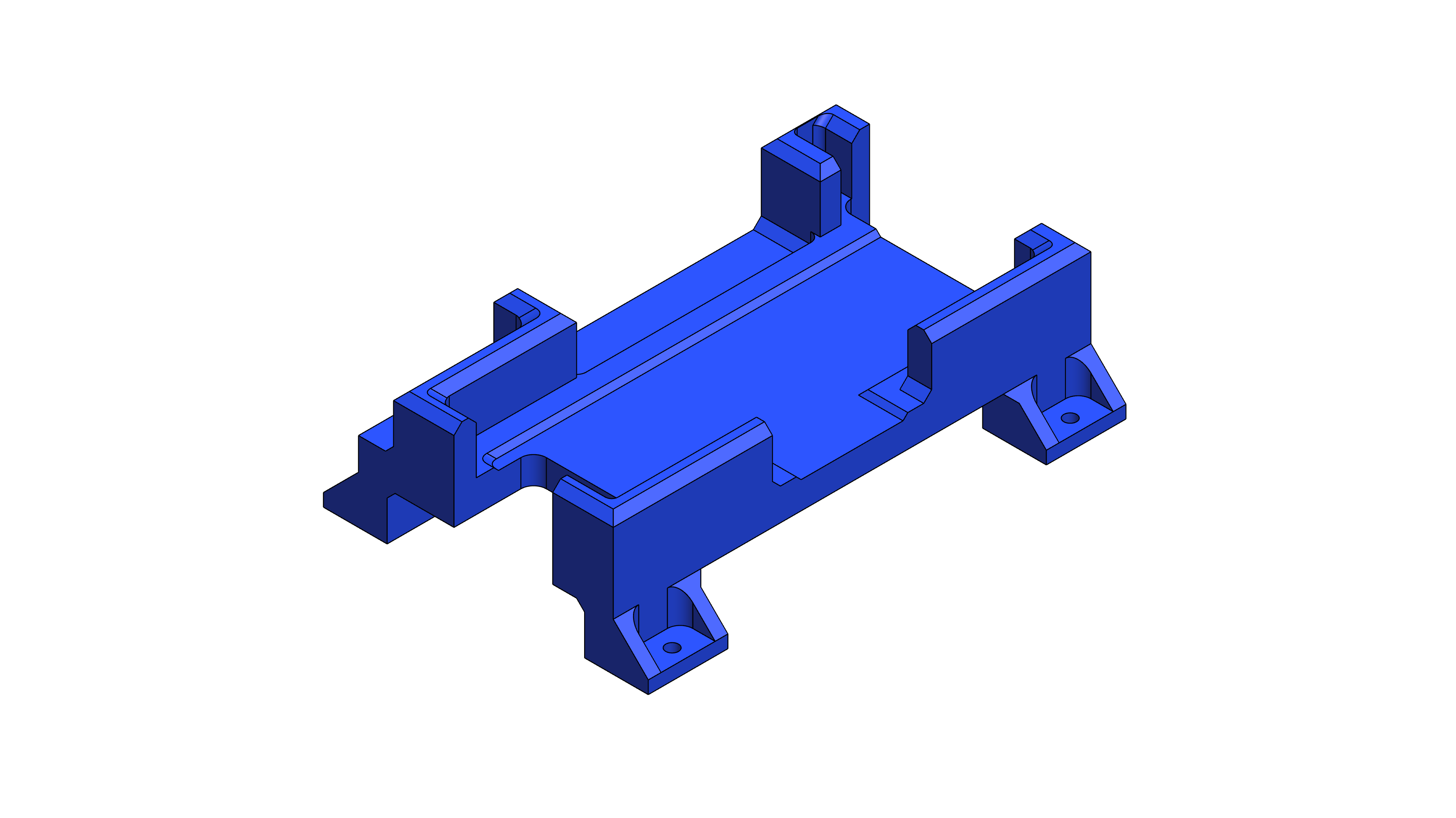
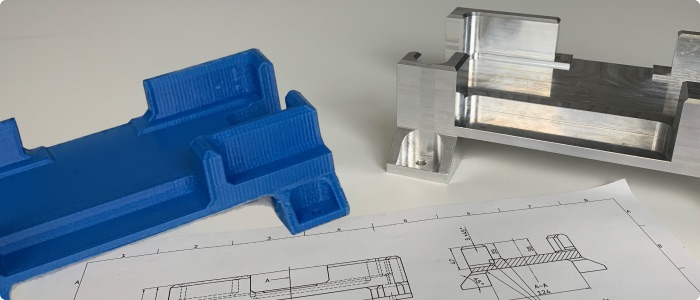
3D printed jigs and fixtures are manufacturing tools created using a 3D printing process known as additive manufacturing. A jig guides a tool like a drill to ensure holes or cuts are placed accurately on every piece produced. A fixture holds a workpiece in place for stability or to align parts.
When used in mass production, both help machinery operate consistently so that each piece is identical, while speeding up production cycles by reducing setup and manual adjustments.
Because many jigs (and to a lesser degree, fixtures) are custom made for high precision and to guide specific parts, 3D printing has become an affordable and convenient method for manufacturing them.
Below, we'll break down the benefits of 3D printing jigs and fixtures, and take a look at some real-world examples from the shop floor.
The basics of 3D printing
3D printing, also known as additive manufacturing, is the process of building a 3D object layer by layer, based on a digital design.
You start by creating a design in 3D CAD software, then exporting it as a file format (typically an STL file) that's readable by a slicer. The slicer prepares your file for printing by converting the design to printable layers, which are instructions for the 3D printer to read.
3D printing has many different applications, from hobbyist jewelry making, to prototyping for automobile and aerospace industries, to assembly fixtures in manufacturing.
How common is 3D printing in manufacturing?
While 3D printing went through a revolution in the 1980s, it wasn’t until decades later that usage skyrocketed.
During the COVID-19 pandemic, 3D printing helped manage the shortage of personal protective equipment (PPE) for hospital staff, and the trend has continued with growing usage in the manufacturing industry:
- More than 68% of companies using 3D printing use it for prototyping and pre-series manufacturing, according to a 2023 analyst survey.
- 58% of respondents of a 2023 Jabil survey say they use 3D printing for jigs, fixtures, and tooling (nearly doubling from 30% in 2017).
Benefits of 3D printing jigs and fixtures
From the automotive industry to the medical supply industry, a variety of companies are 3D printing jigs and fixtures to speed up processes and reduce errors. Benefits include:
Faster production
The flexibility of 3D printing enables teams to rapidly iterate, prototype, and design jigs and fixtures to speed up production. These materials can be printed in-house versus ordering from a third party and waiting weeks for them to be delivered. For instance, Volkswagen Autoeuropa in Portugal reported 89% in time savings after implementing 3D printing.
Design flexibility
With the ability to print multiple iterations of a product on the same day, products can be easily adjusted and customized as needed. Complex shapes that would be hard to execute accurately using subtractive or formative manufacturing can be created more freely using the layering technique of additive manufacturing.
Freeing up resources
The minimal need to supervise 3D printing once it starts on the machine frees up time and resources to work on other tasks, creating an opportunity for additional high-value work.
Cost savings
While getting started with 3D printing requires some initial investment in a printer and software, you can reduce costs in other ways. By moving production of jigs and fixtures in house, you can cut down on outsourcing and shipment costs.
3D printing cuts costs significantly as opposed to manufacturing parts with more expensive processes such as CNC machining. And if your product would require forging or joining if made using traditional manufacturing methods, 3D printing might be able to eliminate the need for those processes, thereby reducing your overall costs.
Barriers to incorporating 3D printing
Getting started with 3D printing in manufacturing can require overcoming a few barriers — though the long-term ROI is likely to outweigh initial challenges. Here are a few barriers to be aware of:
High upfront costs
A 2023 study found that 25% of companies considering adding 3D printing to their manufacturing operations saw equipment costs as a challenge. Industrial printers can range from $20,000 to $100,000, but for jigs and fixtures production, the likelihood of meeting and exceeding ROI in a shorter period of time is higher due to the quick production involved.
Complexity of product
While the innate process of 3D printing a product in layers allows for more complex products to be printed directly, very intricate pieces may be better served by traditional manufacturing methods. The low complexity of most jigs and fixtures makes it an ideal product for additive manufacturing.
Volume limitations
The limitations of 3D printing at its current stage of maturity may make it less ideal for the large-scale manufacturing of more complex products. However, jigs and fixtures typically aren’t manufactured at a volume high enough to make this a barrier.
What materials are commonly used in 3D printing?
Below are a few of the most common materials used in the production of jigs and fixtures:
ABS (acrylonitrile butadiene styrene)
Typically the most popular product for 3D printing, ABS is also the material of choice for jigs and fixtures production. This is due to its overall durability and strength as well as its affordability.
Polyamide (nylon)
Nylon exhibits high ductility and durability ideal for producing responsive prototypes. Its heat resistance and toughness with partial flexibility makes it ideal for snap-fit components, but it is more expensive than ABS.
PLA (polylactic acid)
PLA is a plant-based, biodegradable plastic that is commonly used for its versatility, providing strength and rigidity to parts in temperatures below 50 degrees Celsius. Overall, PLA is user-friendly and can be used with most print settings.
Reinforced fiber
Reinforced materials such as carbon fiber or nylon reinforced with fiberglass can provide more durability for longer performance.
ESD resin
ESD (electrostatic discharge) resin is commonly used by manufacturers for its cost-effectiveness and to increase production on electronics manufacturing lines.
What are best practices for 3D printing jigs and fixtures?
When integrating 3D printing into your manufacturing process, following these best practices can help you prevent issues with your jigs and fixtures:
Plan ahead for complexity
Building complex aspects of a part or including engravings in a model ahead of time can help to quickly produce the product needed. Many of these processes would require additional steps with traditional manufacturing but these can be minimized or eliminated when using additive manufacturing.
Consider ease of assembly
Printing lightweight parts allows you to secure and eject parts in the workflow quickly and efficiently. Consider printing additional parts to supplement the manufacturing process such as work-holding devices and guides.
Design for anticipated use and environment
When designing a jig or fixture, take into account how the tool it's supporting will operate to form the end-product. More space in sections of the jig or fixture could allow for the full range of movement of the tool. The material used also needs to fit the conditions of the environment, taking into consideration heat, cold, or chemical exposure.
Don’t forget about operator experience
While most jigs and fixtures are designed to minimize human error and protect worker safety, additional improvements can be made when taking into account ergonomics and efficiency. For example, you could design a fixture for single-hand use, or at an angle that is most comfortable to operate.
Accessible CAD for designing jigs and fixtures
Custom-designing jigs and fixtures for specific manufacturing processes requires the use of a CAD program. But many CAD systems are complex and require extensive training to operate, adding to lead times when engineers are the only ones who can design them.
According to research firm Tech-Clarity, accessible, easy-to-use 3D CAD like Shapr3D enables technicians and maintenance teams to get involved with the design of jigs and fixtures. This is especially useful at the beginning of the process, when downstream teams can test ideas, visualize clearances, and validate fit before printing parts.
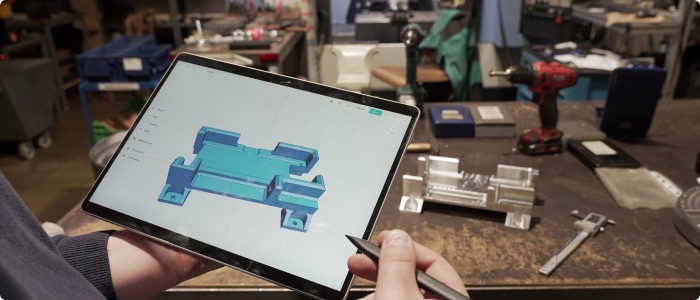
It also allows these teams to design quick fixes when an issue crops up after production. In one example, a maintenance technician using Shapr3D “arrived with his iPad and found the issue: a piece that was less than a millimeter off. ‘Immediately, he adjusted it on the iPad on Shapr3d … printed the alternative part, and less than 45 minutes later, the production line was back on.’”
Shapr3D helped the technical workshop at 3M's Kempten site in Germany introduce 3D printing into its operations. Today, the operation has scaled to include five 3D printers that turn around same-day requests for production parts, including jigs and fixtures.
“Before, a simple part might take four hours to model in other software. With Shapr3D, it’s done in an hour, and I can print it the same day,” said Sebastian, a mechanic who manages printing at 3M Kempten.
Ready to get started? Download Shapr3D to model your first jig or fixture design for 3D printing.
FAQ
How does 3D printing compare to other traditional manufacturing methods?
Additive manufacturing, or 3D printing, consists of constructing an object in parts, layer by layer, from a computer-aided design (CAD) model.
Traditional manufacturing methods might include subtractive manufacturing (SM), which consists of removing the final product from a larger form of material. Formative manufacturing is another method, with CNC milling, drilling, grinding, or molding techniques being the most common.
Both subtractive and formative manufacturing methods require skilled training for professionals, significant time investment, and more expenditure, and often lead to material waste. In contrast, additive manufacturing usually produces little waste due to the nature of its process.
What are the main advantages of 3D printed jigs and fixtures?
Many companies cite the flexibility and time savings of 3D printing jigs and fixtures in house as major advantages, allowing them to test and modify parts easily instead of waiting for ordered parts to come in.
Editor's note: This article was originally published in December 2022 and was updated in January 2026 for accuracy and comprehensiveness.